Mayne Island Truth and Reconciliation Circle Society
Reconciliation Work on Mayne Island
Reconciliation work on SḴŦAḴ / Mayne Island has grown through the efforts of W̱SÁNEĆ Elders, Knowledge Holders, artists, language teachers and youth, together with local organizations and residents. Much of this work predates the incorporation of the Mayne Island Truth and Reconciliation Circle Society. This page records those contributions and credits the people and organizations who led, presented or supported them.
Walking Forward with the Past
A large part of the recent record comes from ŚTEṈIST ȻENTOL EȻSIÁ TĆÁNȻE / Walking Forward with the Past. Conceived by the Mayne Island Museum curator, W̱SÁNEĆ Elders and artists and Indigenous Curator Rose Spahan, the project was managed through the Indigenous Arts Committee of the Campbell Bay Music Festival Society. The project partners included W̱SÁNEĆ Elders, artists, Indigenous Curator Rose Spahan, PEPÁḴEṈ HÁUTW̱ Foundation, the Mayne Island Agricultural Society, Conservancy, Community Library and other contributors. Its principal funders were the provincial 150 Time Immemorial fund through Heritage BC, BC Arts Council, and the Capital Regional District Arts Commission.
Here is a list of specific events we have seen over the years, followed by a summary of the ongoing work being done by island organizations in support of reconciliation.
2009
2009
Honouring Figure in Emma and Felix Jack Park
Created by Elder Johnny Aitken, a 2Spirit Coast Salish, Scottish and Haida artist and author.
In 2009, Elder Johnny Aitken created the 20-foot Honouring Figure now standing in Emma and Felix Jack Park. The work gives permanent public recognition to Indigenous identity, ancestry and presence on Mayne Island.
Initiated by Johnny Aitken, with the Mayne Island Community Library and different artistic and community partners depending on the project.
In the decade following the 2009 Honouring Figure, Johnny Aitken used literature, film, performance and public conversation to bring Indigenous experience into island learning.
Established by the Campbell Bay Music Festival Society, with Indigenous Arts Curator Rose Spahan and W̱SÁNEĆ artists, Elders and Knowledge Holders.
In 2018, the Campbell Bay Music Festival Society established a dedicated Indigenous Arts program under the guidance of Indigenous Arts Curator Rose Spahan and W̱SÁNEĆ collaborators.
Undertaken by the Mayne Island Museum and Mayne Island Agricultural Society with W̱SÁNEĆ partners.
Following the renewed public reckoning with residential schools in 2021, the Mayne Island Museum and Agricultural Society began a formal review of exhibits and museum practices with W̱SÁNEĆ partners.
Led by the Campbell Bay Music Festival Society with W̱SÁNEĆ Elders, artists and families, Indigenous Curator Rose Spahan, PEPÁḴEṈ HÁUTW̱ Foundation and Mayne Island partner organizations.
ŚTEṈIST ȻENTOL EȻSIÁ TĆÁNȻE / Walking Forward with the Past launched on August 27, 2022.
Hosted by the Mayne Island Community Library with the Campbell Bay Music Festival Society, Indigenous Curator Rose Spahan, Sarah Jim, Tina Farmilo, Jennifer Iredale and Micki Stirling.
The Mayne Island Community Library presented thirteen works by W̱SÁNEĆ artist Sarah Jim, including the garden designs and works borrowed from private collections.
Commissioned through Walking Forward with the Past, managed by the Campbell Bay Music Festival Society; carved by TEMOSEṈ Chazz Elliott and Matthew Parlby-Elliott, with painting by Addie Elliott.
During spring 2023, the first welcome pole was shaped from a prepared log, carved, painted and transported to the Agricultural Hall grounds.
Presented through Walking Forward with the Past, featuring W̱SÁNEĆ artist Sarah Jim and the PEPÁḴEṈ HÁUTW̱ Foundation.
At the January 7 launch of her Library exhibition, W̱SÁNEĆ artist Sarah Jim unveiled three Salish designs created for murals at the wetland ethnobotanical garden and spoke about her artistic practice.
Led by W̱SÁNEĆ Elder J,SIṈTEN Dr John Elliott, with participation from the Mayne Island Agricultural Society, Mayne Island Conservancy and Mayne Island Family Place.
J,SIṈTEN Dr John Elliott visited village and harvesting sites on SḴŦAḴ and shared knowledge about SENĆOŦEN place names, reef-net fishing, plants, birds and fire-making.
Guided by the Mayne Island Conservancy and funded by the Campbell Bay Music Festival Society through Heritage BC, with PEPÁḴEṈ HÁUTW̱ staff Judith Lyn Arney, Sarah Jim and Kyle Clarke.
Twenty-eight islanders travelled to SṈIDȻEȽ to remove invasive plants and learn about the area's W̱SÁNEĆ history.
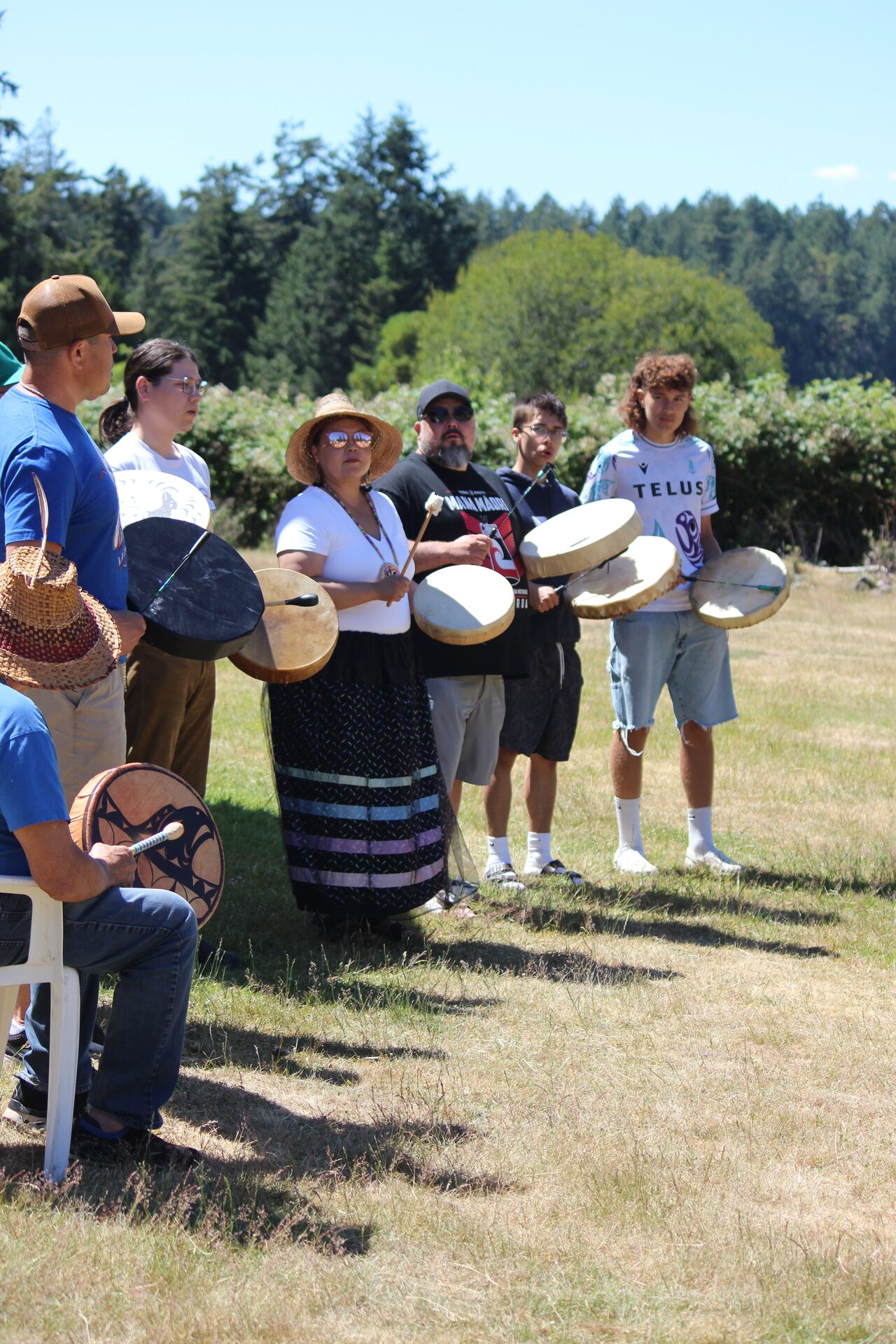
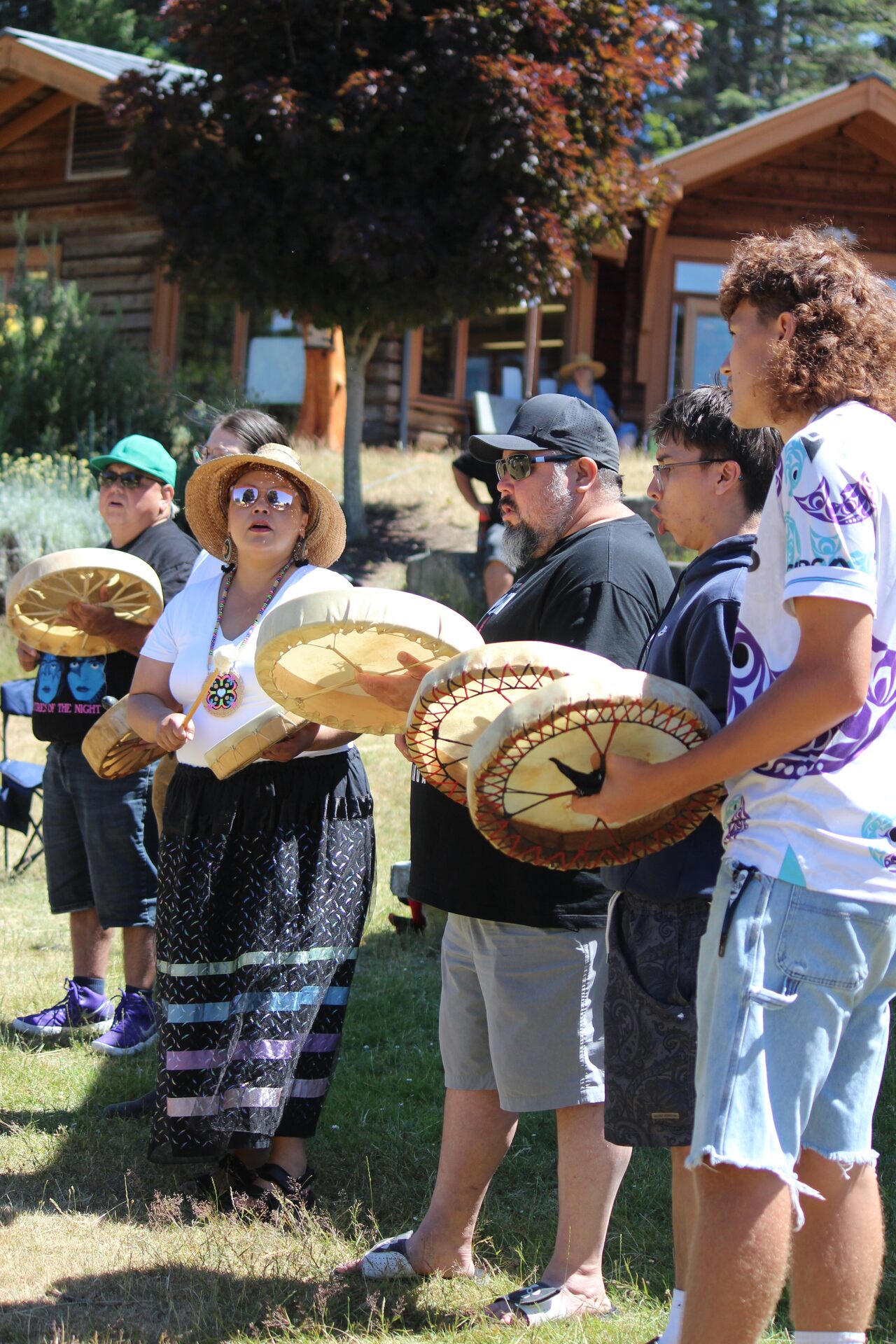
Presented through Walking Forward with the Past and the Campbell Bay Music Festival, with TEMOSEṈ Chazz Elliott, Matthew Parlby-Elliott, Addie Elliott, J,SIṈTEN Dr John Elliott and the HELI,SET Drum Group.
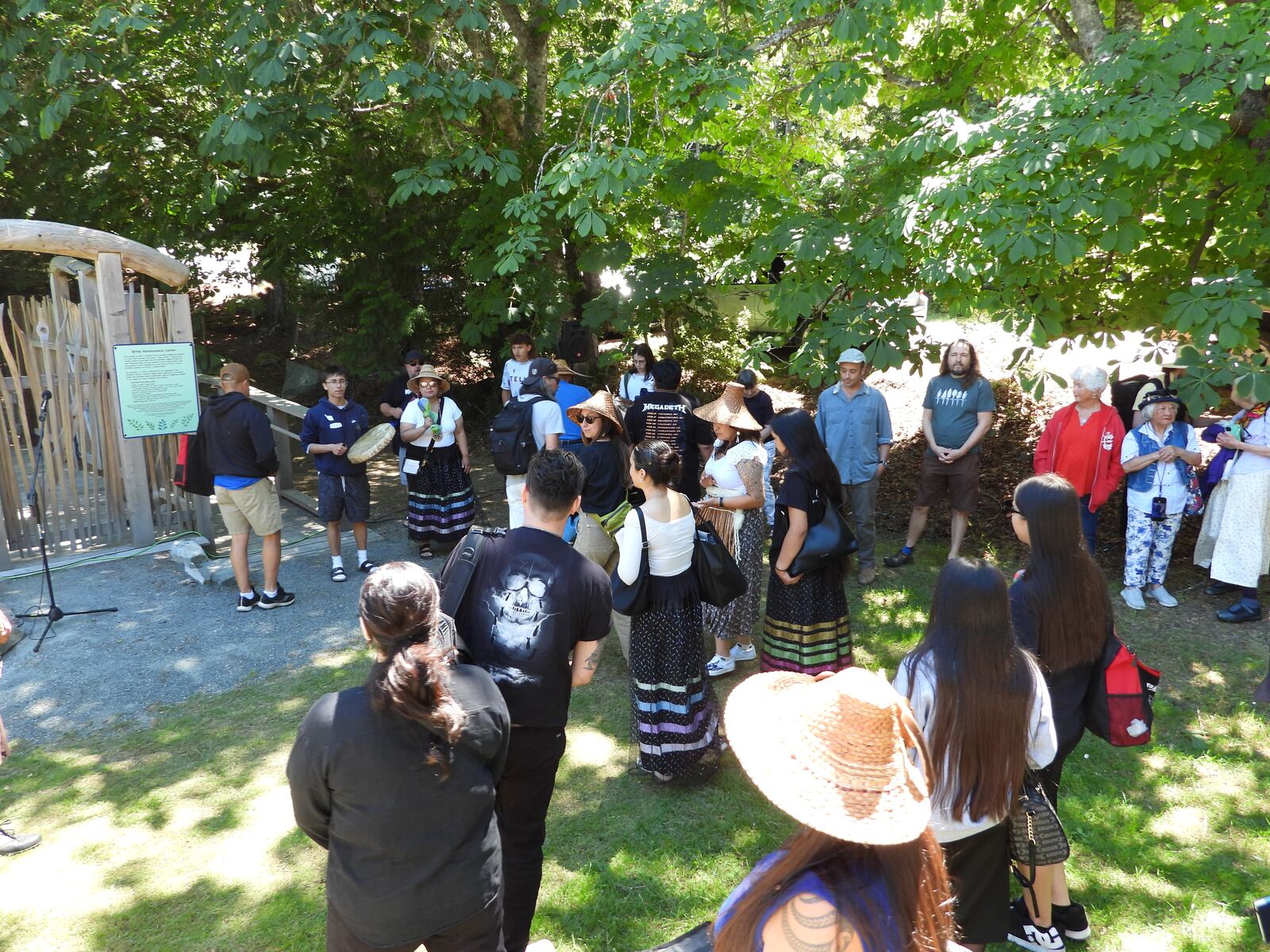
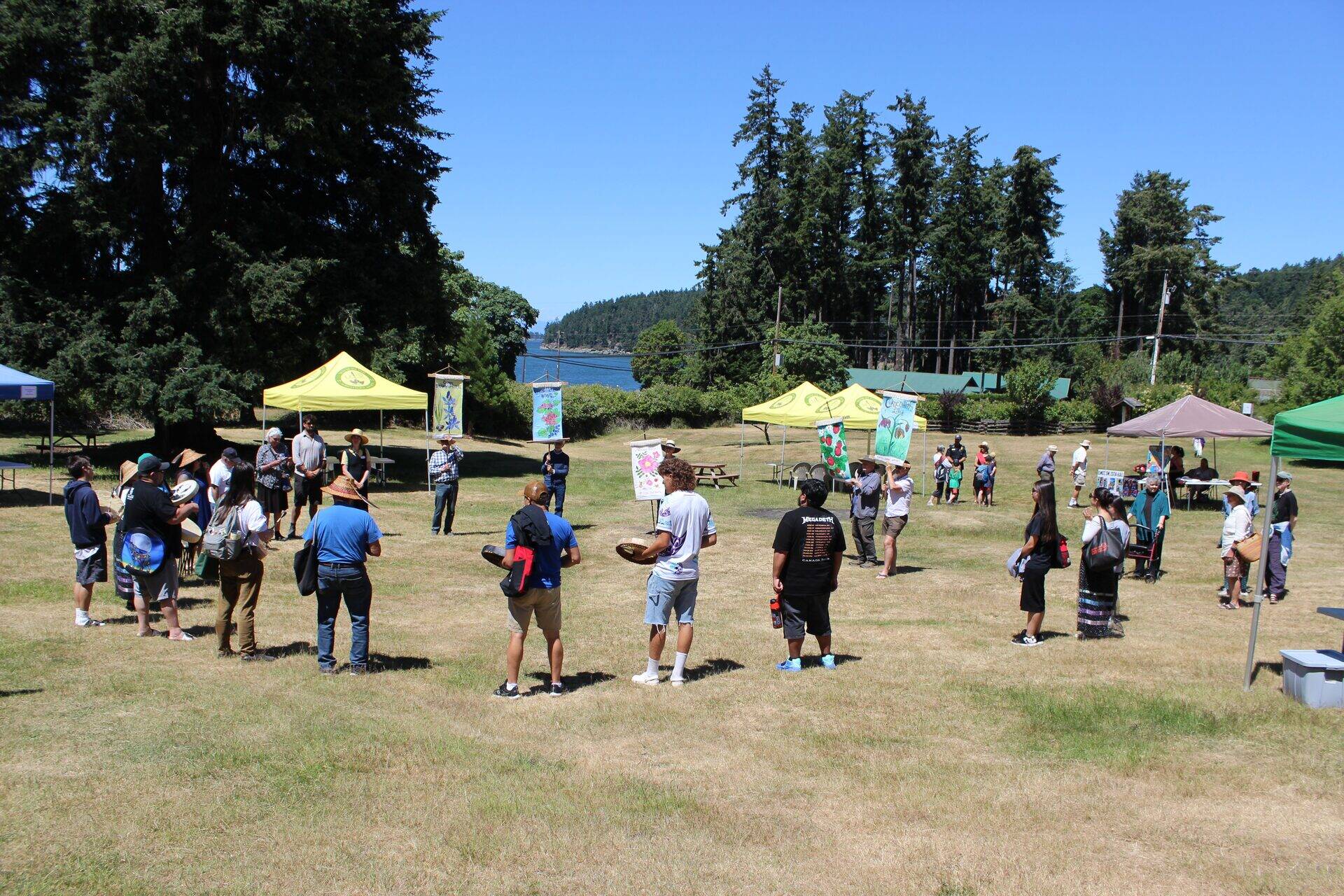
The first welcome pole was unveiled at the Agricultural Hall grounds on June 23, 2023, with W̱SÁNEĆ words, songs and ceremony.
Developed by the PEPÁḴEṈ HÁUTW̱ Foundation with the Mayne Island Conservancy, Mayne Island Agricultural Society, Campbell Bay Music Festival Society and other project partners.
Project partners prepared the wetland site at the Agricultural Hall grounds, built garden infrastructure and planted native food and medicinal species.
Co-hosted by the Mayne Island Conservancy, Community Library, Agricultural Society and Campbell Bay Music Festival Society, with the HELI,SET Drum Group and artist Sarah Jim.
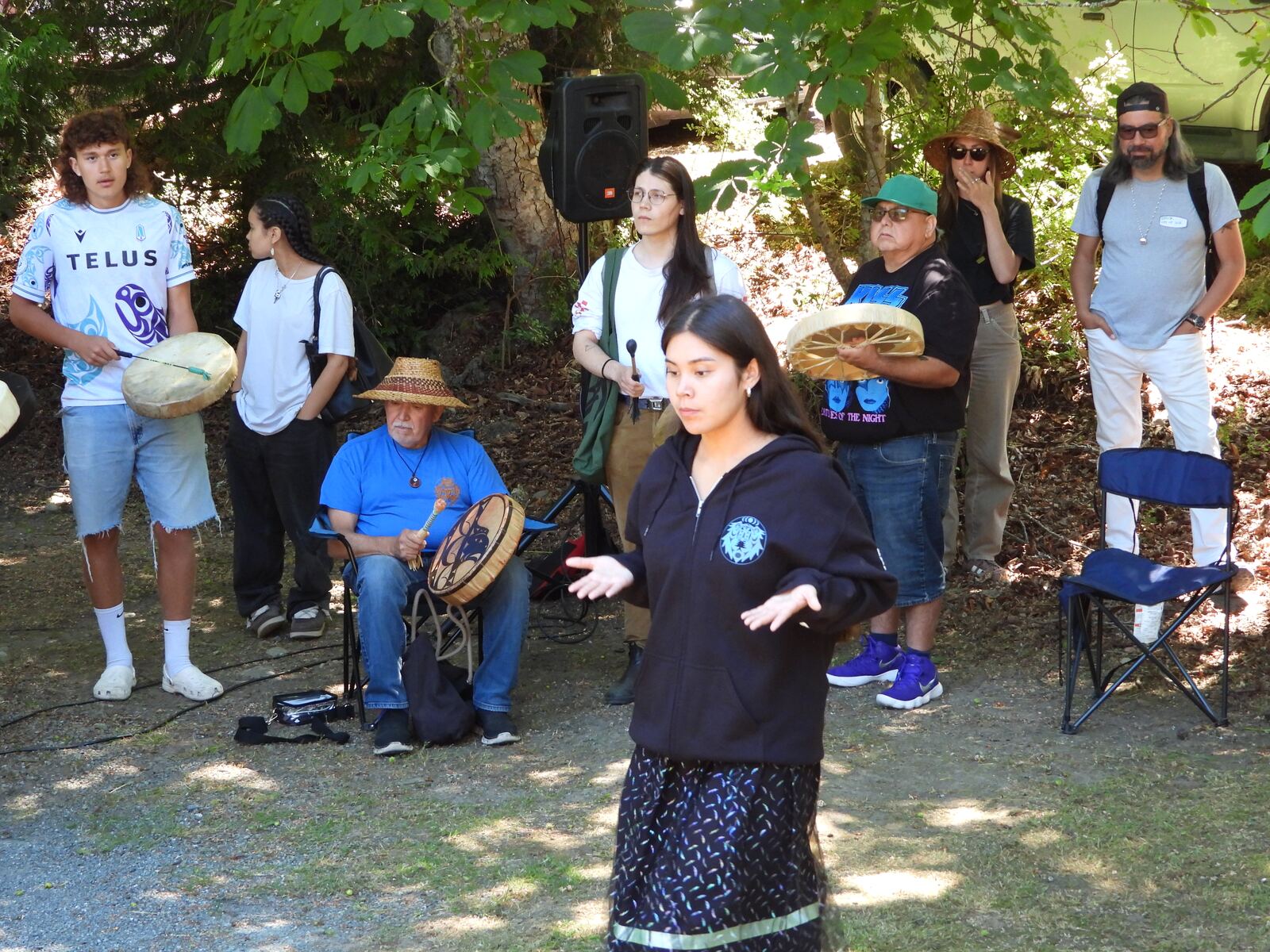
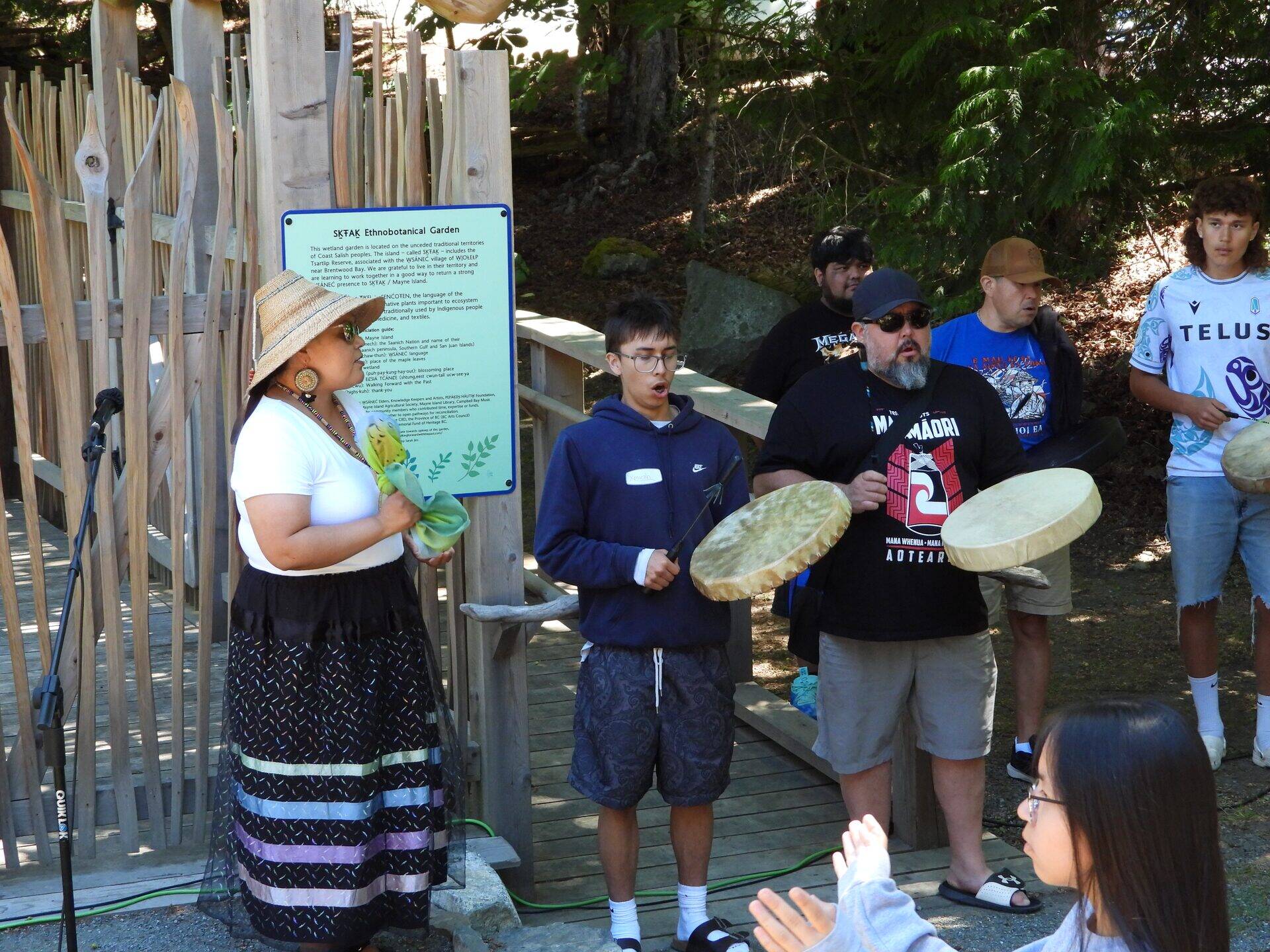
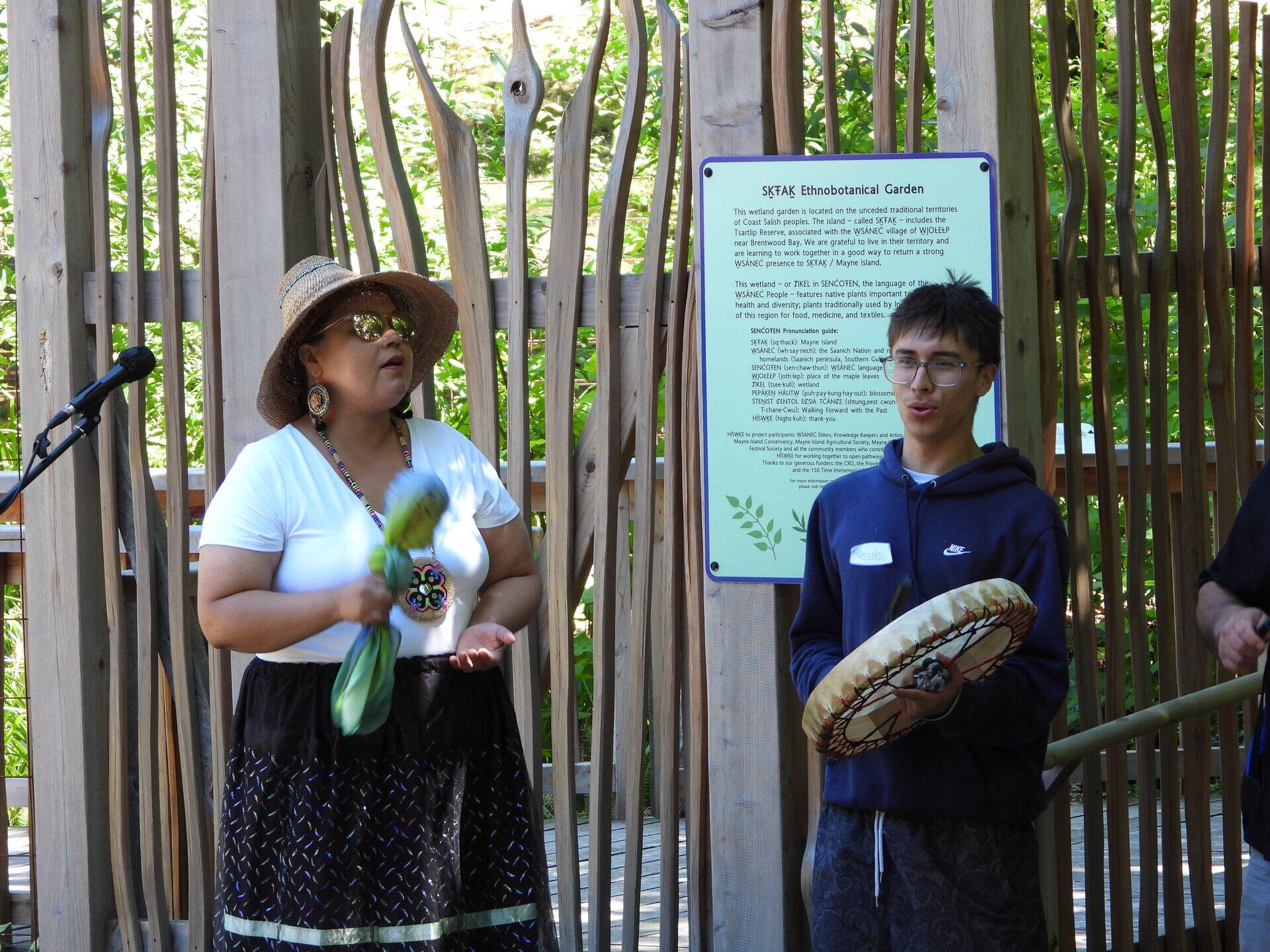
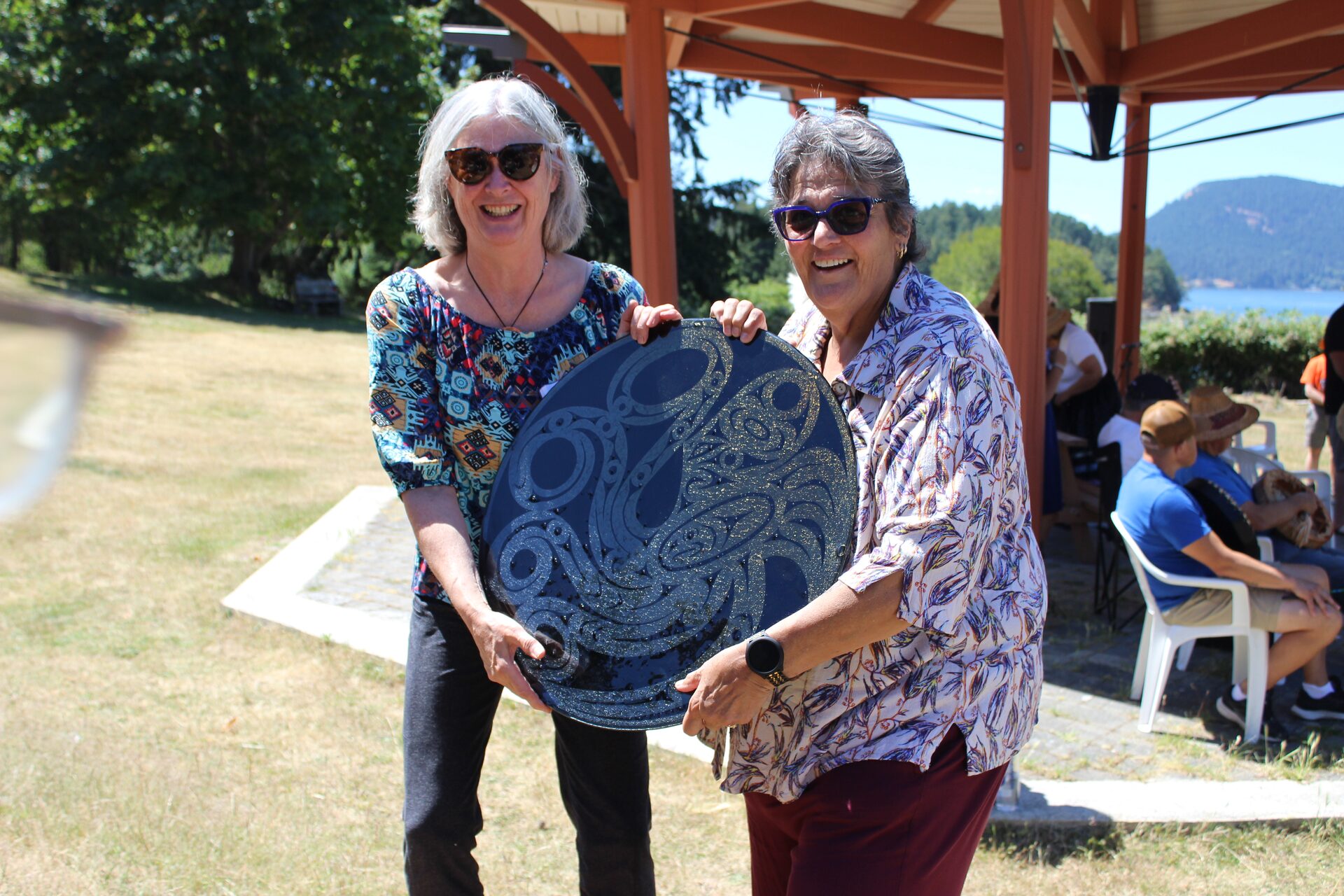
The HELI,SET Drum Group blessed the new wetland ethnobotanical garden and Sarah Jim's SḴŦAḴ Triptych was unveiled.
Hosted by the Mayne Island Community Library and co-curated by Indigenous Curator Rose Spahan and Tina Farmilo, featuring Myrna Crossley-Elliott, TEMOSEṈŦET Dr Charles Elliott, TEMOSEṈ Chazz Elliott and Matthew Parlby-Elliott.
The JSIṈSET ŚW̱ELOḴE Salish Art Exhibit brought carving, prints and weaving by four members of the Elliott family together at the Community Library.
Presented through the Campbell Bay Music Festival Society's Indigenous Arts programming with filmmaker Leslie Bland and Coast Salish carver TEMOSEṈ Chazz Elliott of W̱JOȽEȽP First Nation.
A screening of the documentary A Cedar Is Life was followed by discussion with filmmaker Leslie Bland and TEMOSEṈ Chazz Elliott.
Led by SX̱EDŦELISIYE, LIQITIYE and Tye; co-presented by the Mayne Island Library Association and W̱SÁNEĆ School Board; sponsored by the Mayne Island Early Childhood Society.
This first documented SENĆOŦEN language workshop on SḴŦAḴ introduced pronunciation, common expressions and place names, together with the history of language suppression and revitalization.
Hosted by Walking Forward with the Past for project participants and guests, with Heritage BC representatives and W̱SÁNEĆ and Mayne Island contributors.
Walking Forward with the Past received a Heritage BC Award in the Indigenous and Diverse Cultures category.
The pole was carved by TEMOSEṈ Chazz Elliott through Walking Forward with the Past. The ceremony included J,SIṈTEN Dr John Elliott, MENEŦIYE, ȽÁU WELṈEW̱ Tribal School youth dancers and MLA Adam Olsen.
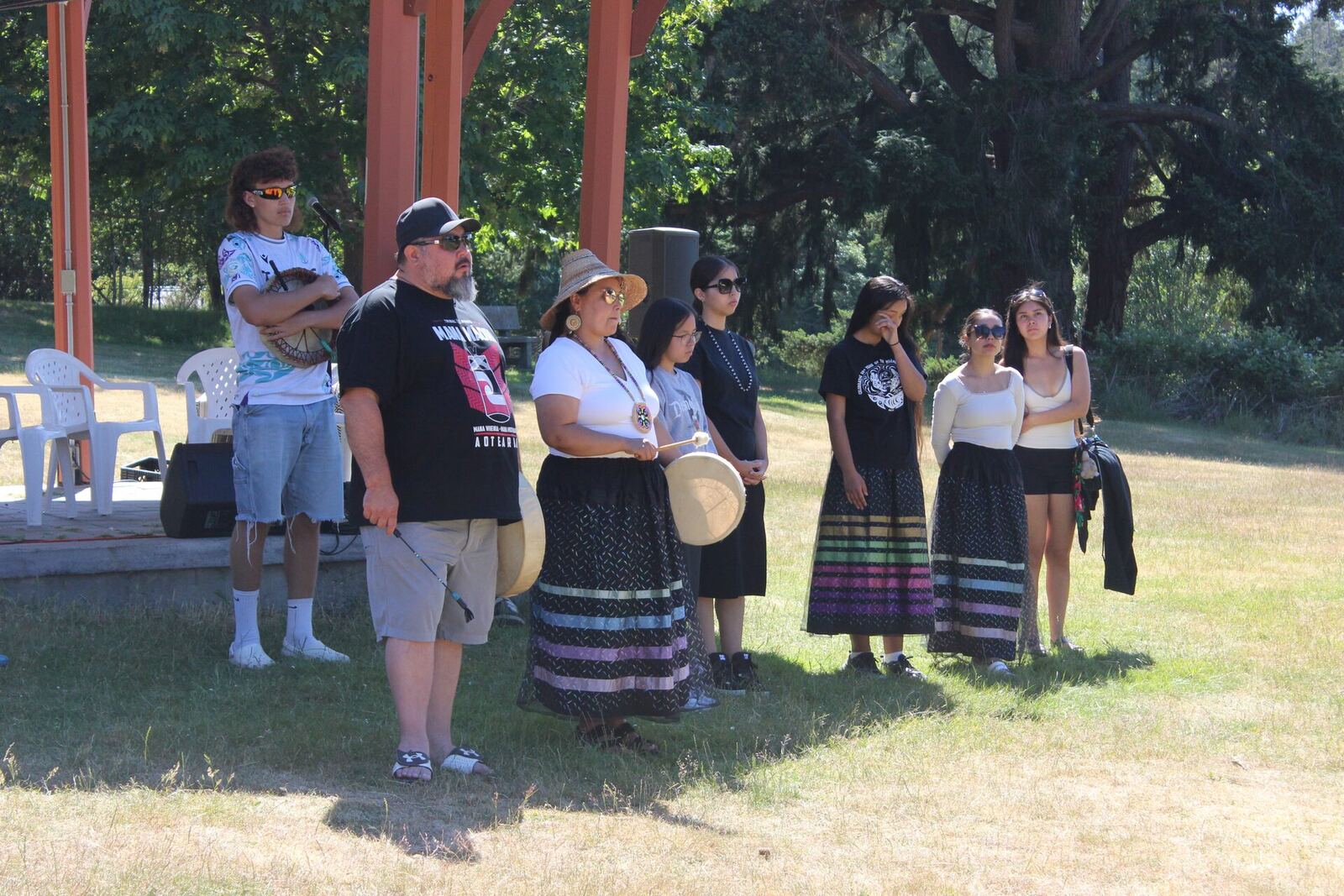
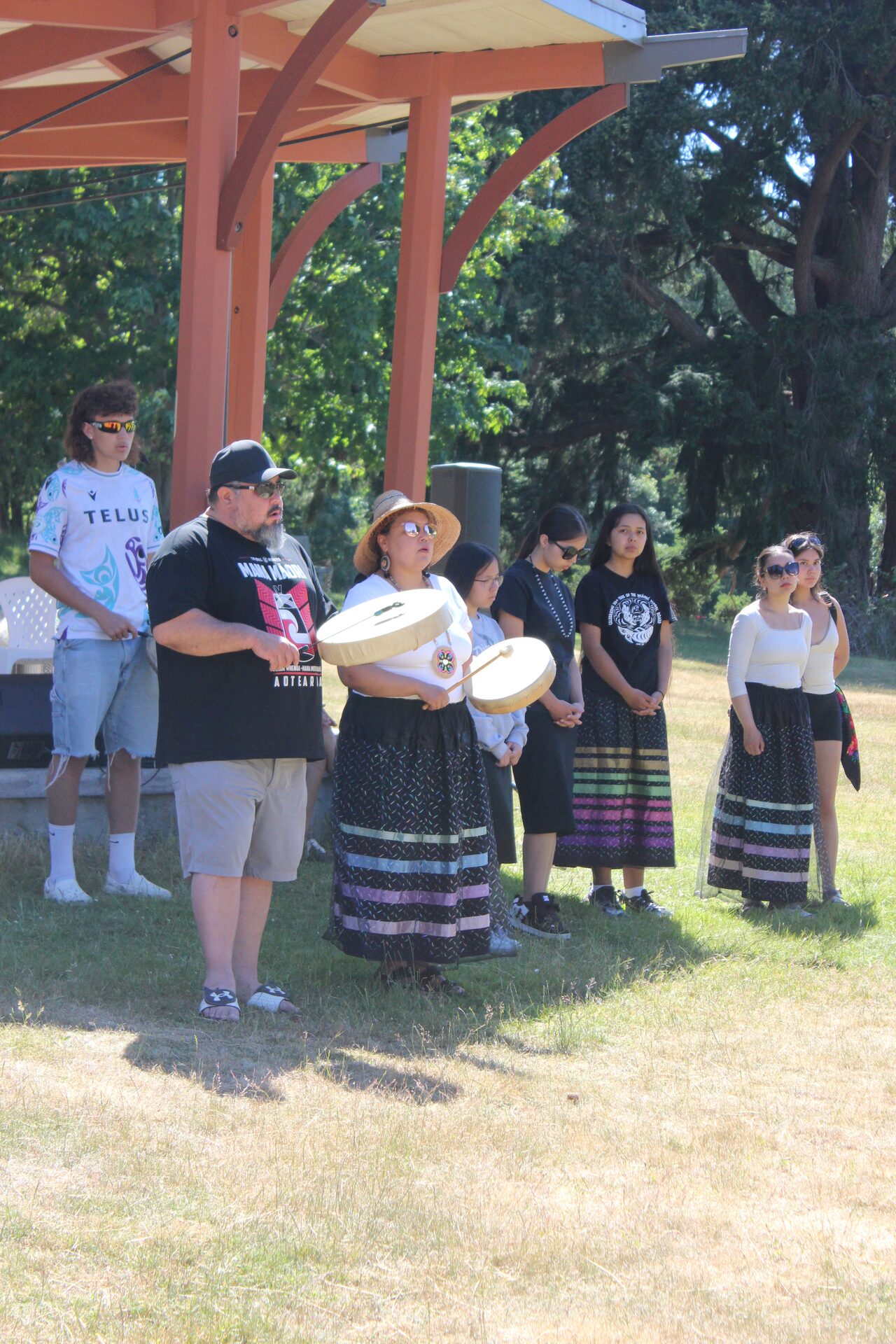
The second Salish welcome pole was unveiled at the Agricultural Hall grounds on National Indigenous Peoples Day.
Presented through the Indigenous Arts program with Myrna Crossley-Elliott, Beangka Elliott, MENEŦIYE, SELILIYE Belinda Claxton, Linda Elliott and partner organizations.
The Agricultural Hall hosted Myrna Crossley-Elliott's Salish weaving, an artist talk, foraged medicinal teas, project films and cedar-bark workshops.
Led by SX̱EDŦELISIYE and SENĆOŦEN Youth Ambassadors from W̱SÁNEĆ Secondary School through the Indigenous Arts program.
A multi-month series gave Mayne Island participants repeated opportunities to practise SENĆOŦEN pronunciation and learn from W̱SÁNEĆ language educators and youth.
Hosted by the Mayne Island Community Library with the Campbell Bay Music Festival Society, Indigenous Curator Rose Spahan and the exhibition team, featuring Kwantlen and Musqueam artist Atheana Picha.
The third annual Salish Art Exhibit presented Atheana Picha's printmaking, digital drawing, weaving and painting at the Community Library.
Led by W̱SÁNEĆ weaver and educator MENEŦIYE and co-presented by the Campbell Bay Music Festival Society and Mayne Island Conservancy.
Participants learned cedar-bark weaving techniques, harvesting protocols, environmental stewardship, stories and SENĆOŦEN vocabulary while making a wearable headband at the Agricultural Hall.
Organized by the Mayne Island Truth and Reconciliation Circle, with films and presentations by Indigenous and W̱SÁNEĆ artists and educators.
Mayne Island's first Indigenous Film Festival used film and facilitated discussion to explore Indigenous history, contemporary experience and relationships with land and sea.
MITARCS was incorporated after earlier work led by W̱SÁNEĆ contributors, the Campbell Bay Music Festival Society, Old Hat Arts and other Mayne Island organizations.
The Mayne Island Truth and Reconciliation Circle Society was incorporated on February 14, 2026.
Hosted by the Mayne Island Community Library through the annual Salish Art Exhibit program, with Campbell Bay Music Festival Society and Old Hat Arts contributors, featuring W̱SÁNEĆ artist Chris Paul of W̱JOȽEȽP First Nation.
The fourth annual Salish Art Exhibit, Rebuilding Our Connections Walking in Our Ancestors Footsteps, presented the work of W̱SÁNEĆ artist Chris Paul. A June 10 reception and panel placed the artist's work and family history in context.
Launched by the Mayne Island Truth and Reconciliation Circle Society with regional Elders, Knowledge Holders, artists, participants and project partners.
The festival connected the Chris Paul exhibit with intergenerational story circles and guided walks in the ethnobotanical garden.
Presented by Old Hat Arts through the Longest Day Festival with W̱SÁNEĆ Knowledge Holders, artists, language teachers, youth and partner organizations.
The Longest Day Festival opened with SX̱EDŦELISIYE and included a SENĆOŦEN choir, a forest walk, a camas block-printing workshop, Chris Paul's sculpture and curator-led visits to his Library exhibition.
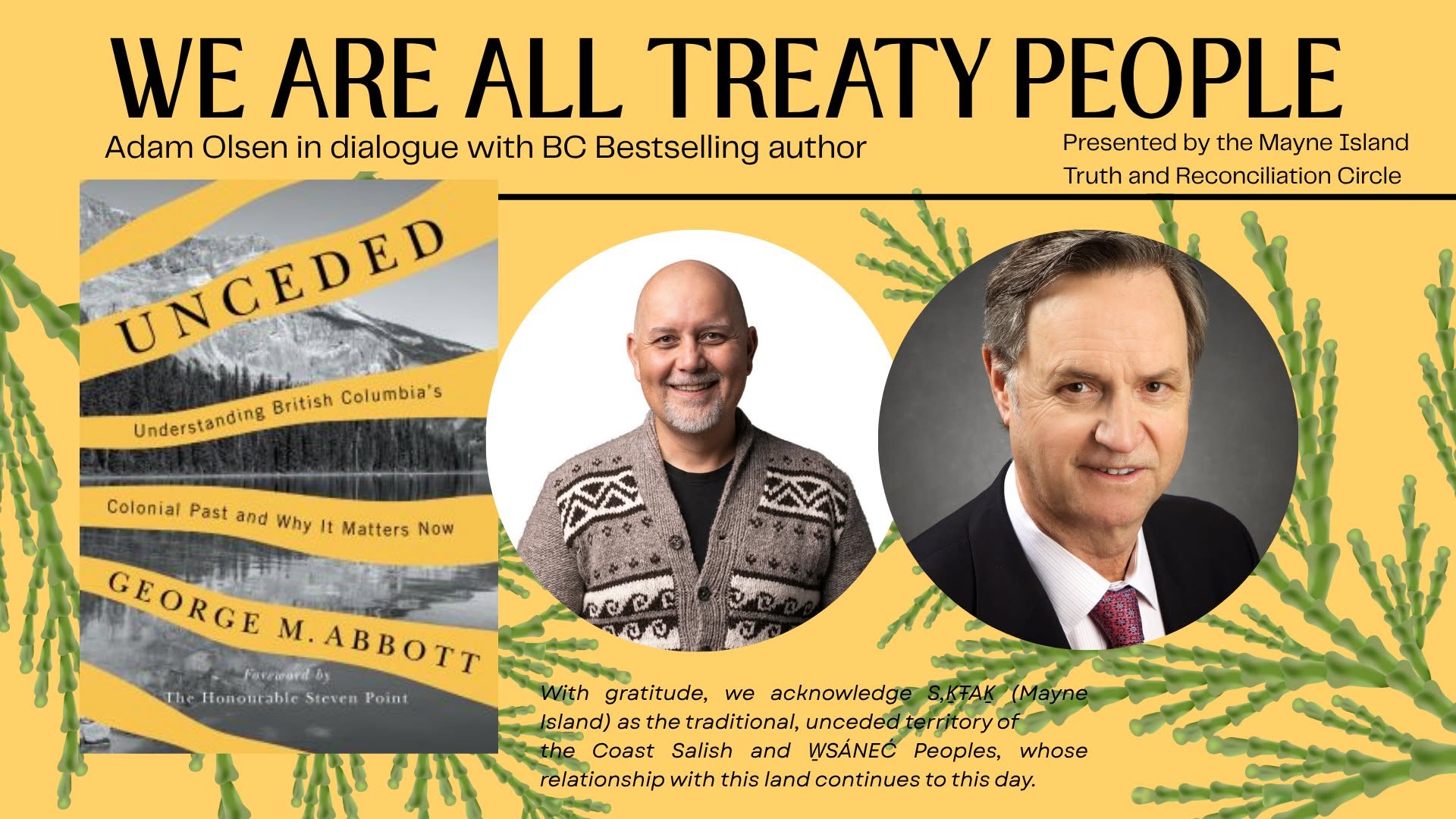
Hosted by MITARCS, featuring George Abbott and Adam Olsen.
George Abbott, author of Unceded: Understanding British Columbia's Colonial Past, joined Adam Olsen, former MLA and W̱JOȽEȽP First Nation lead negotiator, for a public conversation at the Mayne Island Agricultural Hall.
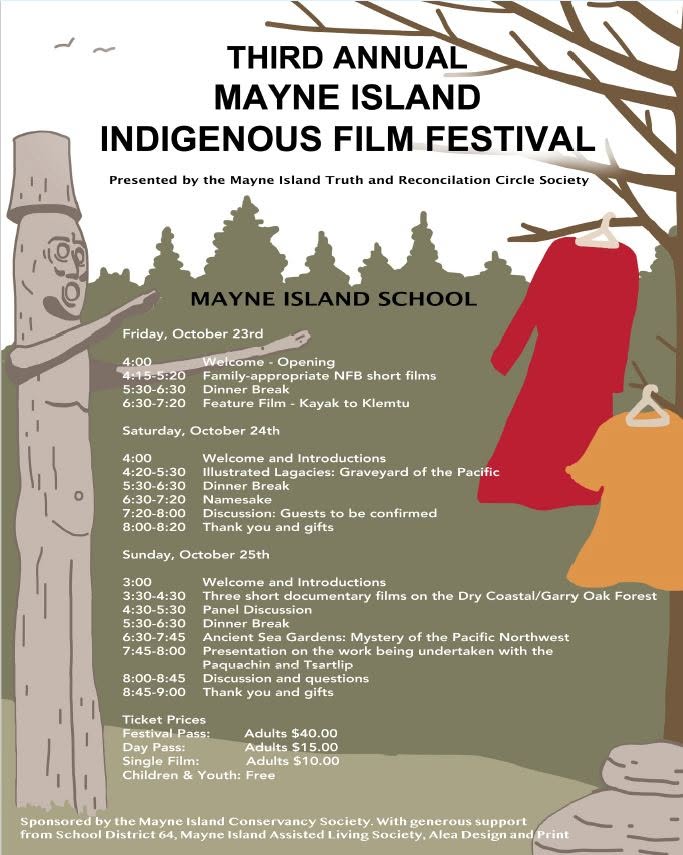
From October 23 to 25 at the Mayne Island School, the third annual Mayne Island Indigenous Film Festival will bring together stories of land, family, history and Indigenous stewardship. The program ranges from the family adventure Kayak to Klemtu to the recent documentaries Illustrated Legacies: Graveyard of the Pacific and təm kʷaθ nan (Namesake). Short films about dry coastal and Garry oak ecosystems, Ancient Sea Gardens, and discussions about restoration work with Pauquachin and Tsartlip connect the films directly to the lands and waters around us. It promises a thoughtful and engaging weekend for adults, youth and families.
Mayne Island Community Library Reconciliation Resources and Programming
The Community Library supports reconciliation through Indigenous books and learning resources, Mayne Island Reads, youth-oriented National Indigenous Peoples Day activities, annual Salish art exhibitions and partnerships with island organizations. This continuing work gives residents access to Indigenous-created material between major events and provides a dependable public venue for exhibitions, conversation and community learning.
Mayne Island Conservancy
Mayne Island Conservancy Indigenous Relations Committee
The Conservancy's Indigenous Relations Committee develops policies and procedures, supports reconciliation activities and helps maintain relationships with W̱SÁNEĆ people and organizations. Its work provides an organizational home for continuing attention to Indigenous laws, knowledge and stewardship, so that reconciliation is carried into governance and land-care decisions rather than depending only on individual public events.
Mayne Island Conservancy
Sea Garden and Deer Stewardship Learning
The Mayne Island Conservancy has hosted learning led by W̱SÁNEĆ Knowledge Holders on sea gardens, traditional food harvesting and deer stewardship. These activities connect reconciliation with practical land and marine care. They recognize that W̱SÁNEĆ stewardship knowledge remains relevant to present ecological questions and create opportunities for island residents to learn under Indigenous direction.
Mayne Island Conservancy
Support for W̱SÁNEĆ Led Restoration and Protection
Island participants have joined W̱SÁNEĆ-led restoration and protection activities, including volunteer work at SṈIDȻEȽ and support connected with SELEK̵TEL̵ / Goldstream. The March 23, 2023 SṈIDȻEȽ visit is already recorded. The broader practice is an important form of reciprocity because island organizations contribute to priorities identified by W̱SÁNEĆ communities rather than limiting reconciliation to learning activities held on Mayne Island.
Indigenous Arts program
Indigenous Arts Educational Resources and Digital Record
The Indigenous Arts program created films, recorded talks, event documentation and Learn about SḴŦAḴ resources, and adopted a code of conduct encouraging self-education, community responsibility and redistribution. This digital record preserves public learning beyond the life of individual events and credits the Elders, artists and organizations who contributed.